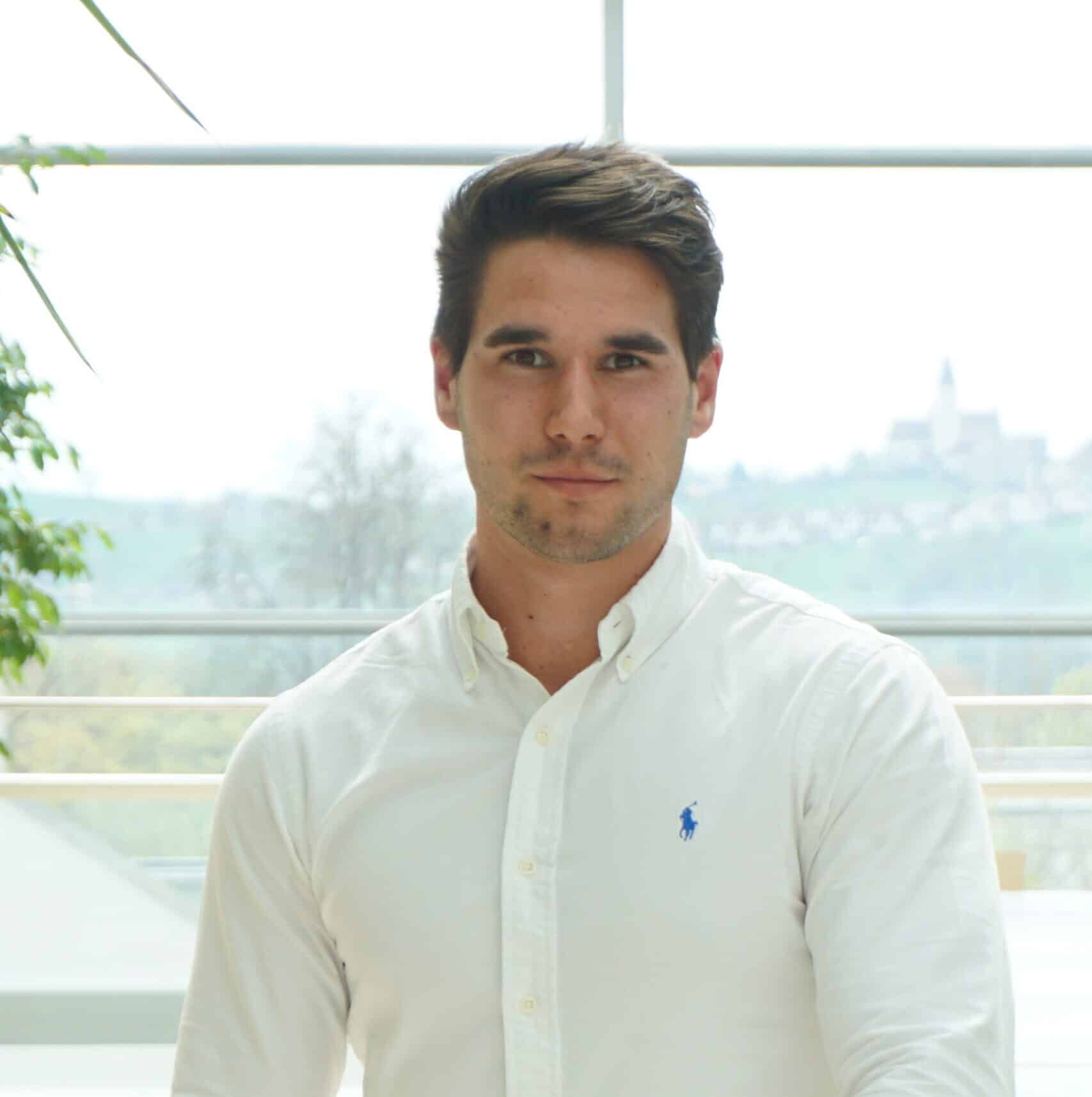
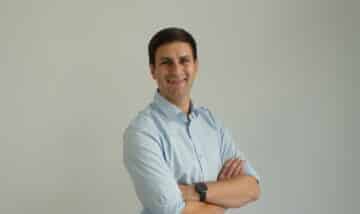
Manuel Schlenkrich studies Mathematics and Economics at JKU Linz and wrote his Bachelor’s thesis in cooperation with RISC Software GmbH. He was supervised by Dr. Michael Bögl. The thesis focused on scheduling and optimization in industry.
What is your bachelor thesis about?
Manuel: My Bachelor’s thesis deals with the use of scheduling algorithms for scheduling problems in industry. This means it’s about the optimal planning of machines, multi-layered work steps, and the timely processing of orders, for example, in complex production systems. There are various theoretical solutions for this; within the scope of my Bachelor’s thesis, I analyzed the Shifting-Bottleneck method and implemented it in Python.
For this, I first conducted comprehensive literature research. This was followed by the implementation of initial smaller programs to solve minimal examples, in order to get a feel for the subject matter. Step by step, this was then expanded and documented in writing. In regular consultations, my Bachelor’s thesis was repeatedly revised and supplemented.
Where are the Concrete Problems in Real Applications / What Were the Challenges of the Topic?
Dr. Michael Bögl: In this specific problem, the fundamental issue lies in the sheer incredible number of possible schedules, each of which is different. Even with just 13 different orders, there are already over 6 billion different processing sequences.
Each processing sequence has certain characteristics, such as when the last order will be completed or how many orders will be delivered late. The goal is to find the processing sequence that best fulfills desired properties, such as minimizing the number of late-delivered orders. Due to the many alternatives, it is not possible for a computer to generate and evaluate every possible sequence. Methods must be developed that generate good processing sequences with as little computational effort as possible. In industrial problems, many different aspects that need to be considered in a valid schedule are added. The number of orders to be scheduled is also usually very large.
What Skills are Needed to Develop Solutions?
Dr. Michael Bögl: To successfully solve industrial problems, in addition to specialist knowledge, a structured and creative approach is necessary to recognize the often very complex interrelationships and take them into account in the designed solution concept. Every problem is different and requires different solution methods.
Manuel possesses both the specialist knowledge and a structured and creative approach. During his work, he independently developed his own ideas and solutions and implemented them very successfully. Such problems are certainly not for everyone. However, those who enjoy tinkering and challenging problems will appreciate the diverse field of combinatorial optimization.
How did you come to write the thesis at RISC Software GmbH and what was the supervision and the process like?
Manuel: Already in the summer of 2017, I completed a 6-week summer internship at RISC Software GmbH, where I gained my first insight into the field of scheduling. At that time, I had completed 4 semesters of my Bachelor’s degree. At the end of the internship, I was offered the opportunity to write my Bachelor’s thesis there at any time. In spring 2018, I was already offered the first topics and quickly made my decision. My supervisor at the university became Professor Wolfgang Windsteiger. The first meetings with the three of us followed, where the task and implementation of the Bachelor’s thesis were specified. From then on, independent work began with bi-weekly or tri-weekly meetings to discuss the current status and further procedure. The supervision throughout the entire period was truly excellent, and I received support whenever I encountered problems.
In which fields of activity would you like to work in the future? What are your plans for the future?
Manuel: I am currently still working in the field of scheduling and optimization. I find this field of activity extremely exciting, and I intend to continue working on it for a long time. My goals in the near future are the completion of my Master’s degree in Industrial Mathematics, as well as my second degree in Economics.
We’ve received your documents and will review your application carefully. As soon as we have feedback for you or need any additional information, we’ll get in touch.
Thank you for your interest – we’re excited to learn more about you! In the meantime, feel free to pass the time by discovering a bit more about us 🙂